Tyvek Bicycle Brake Light!

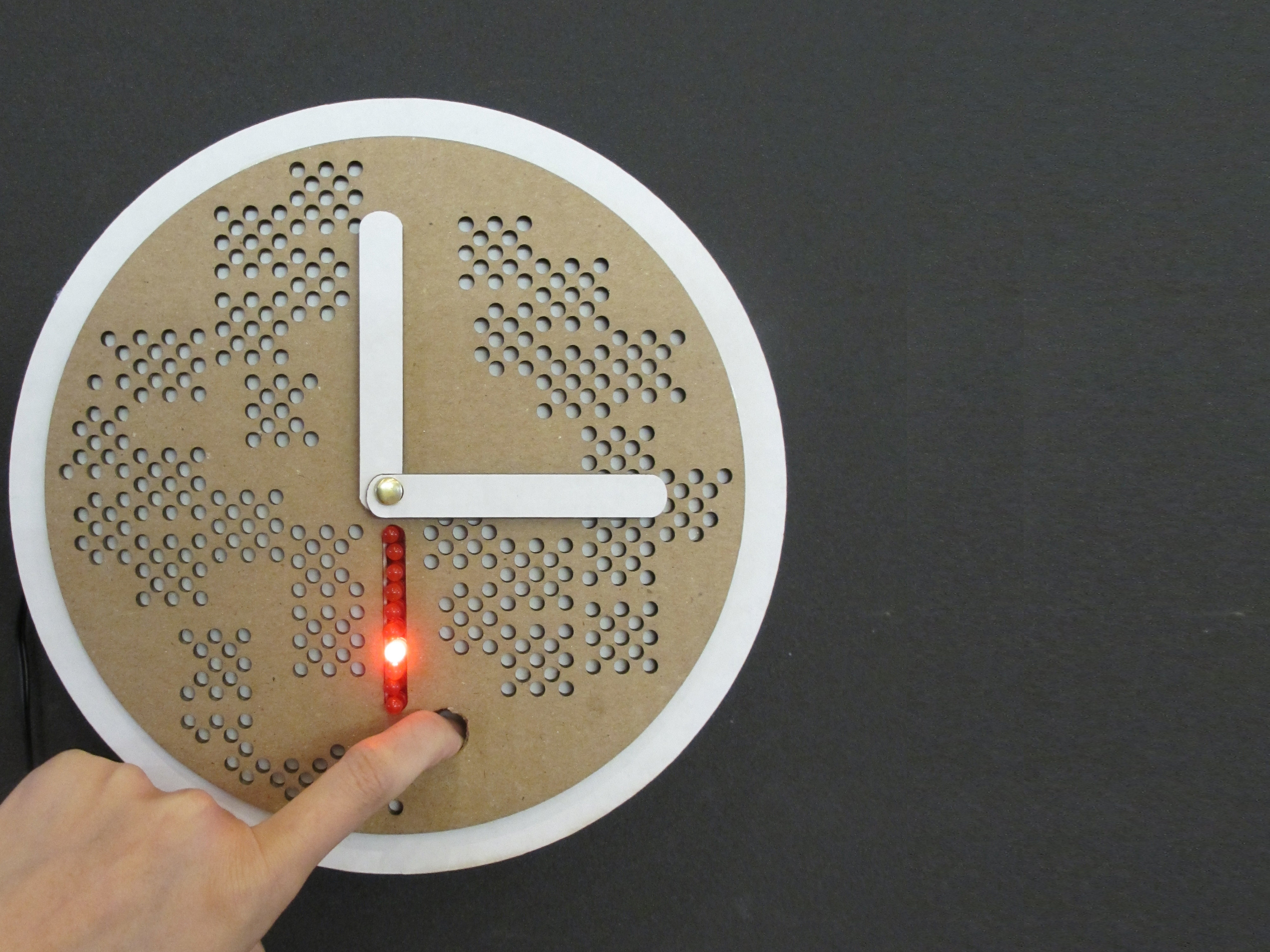
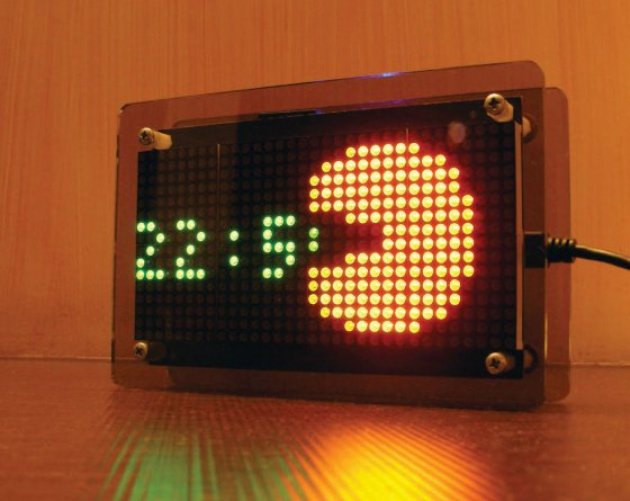
This is the Tyvek Bicycle Brake Light! It works with simple push-button Arduino code. For this project, I wanted to create a bike accessory that I could actually use. The brake light comes in handy while riding in heavy traffic!

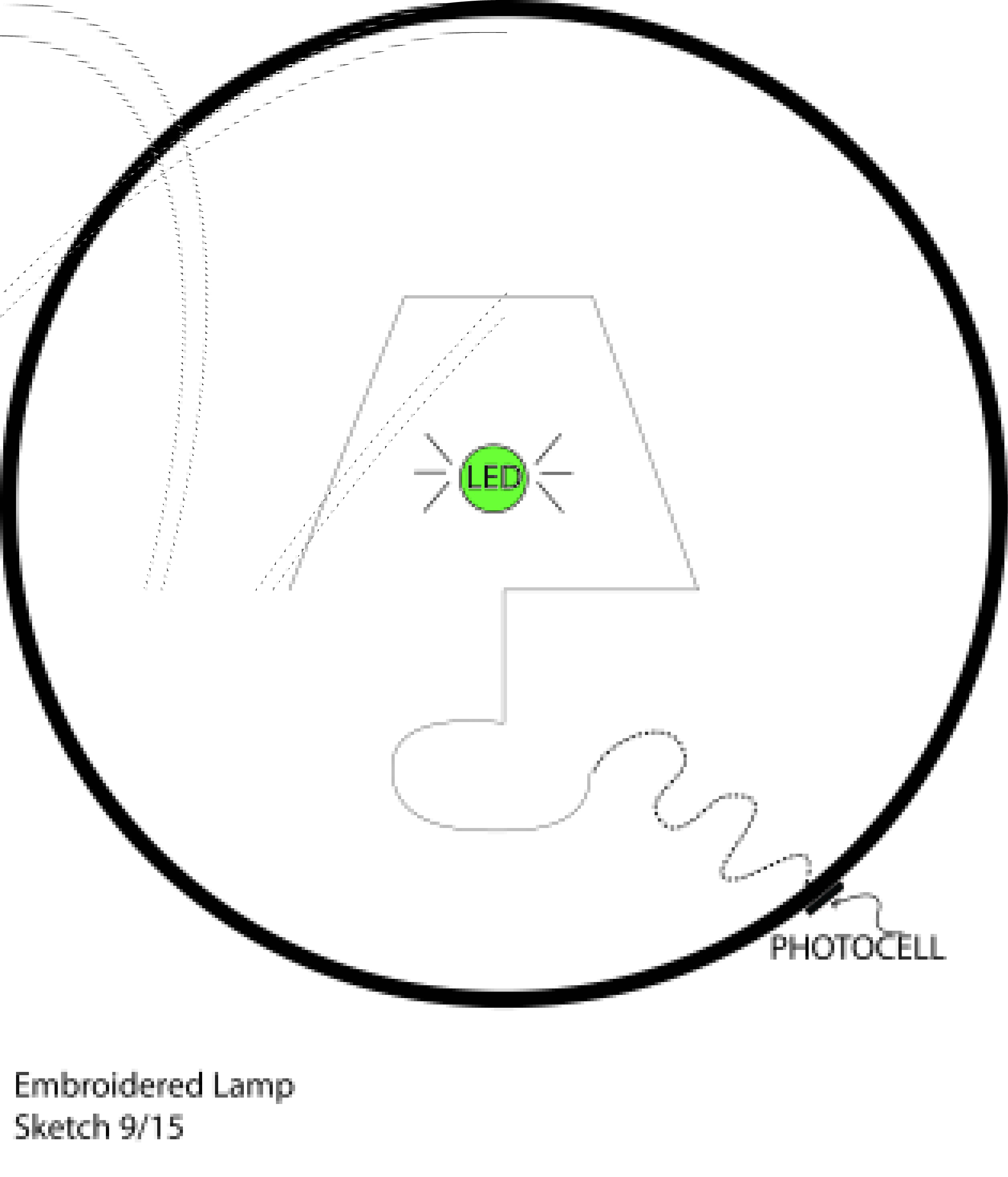
Above is the initial sketch and first Arduino mock-up.

The light is comprised of two 12V LED strips, wood and acrylic. A Tyvek FedEx envelope holds the electrical components which are zip tied to the bike frame. To make the light I used an online box generator to create the geometry for the wooden pieces. Then I created a hexagonal pattern in AutoCAD for the “BRAKE” text which was laser cut into the surface of the acrylic. I am quite happy with the esthetic of the piece, but I wrestled for hours over the electronics.  Richard helped me figure out that I had the batteries wired up incorrectly, and that’s why my TIP120 transistor was overheating. I think I got a perfect circle burned into my fingertips from the transistor!

The next step for me would be to fit an FSR sensor to the brake lever so that it would trigger the light.

Awkward Musical Instrument with Arduino

Image

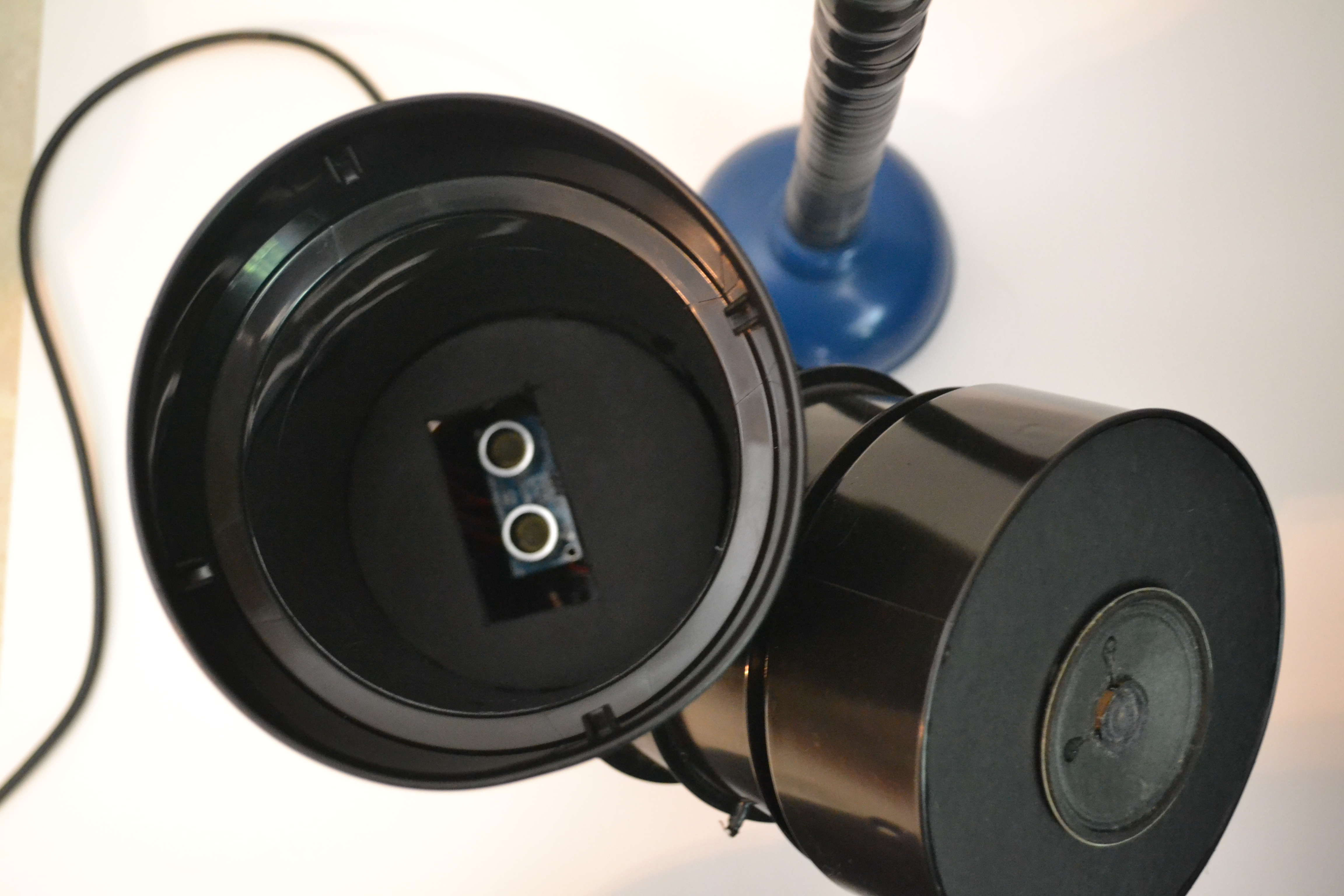
The Arduino Pipe Organ is simple to play – lower the plunger into the pipe and you are a musician! I’d like to think if Mario and Luigi played an instrument it would be this one. The pipe is fitted with an ultrasonic distance sensor and  the plunger’s distance from the sensor determines the tone that will come out of the speaker.

Image

Currently the pipe is programmed to play 8 notes (in the key of C) using Arduino Tone code. I am hoping to explore more notes and sounds in the future, the possibilities are endless.

I apologize for the static in this video, I am working to correct this but in the meantime here is an improvised song on the pipe organ so you can see it in action:

Edible-Mousetrap-Morsecode-Warning-Machine

This is the edible mousetrap built in 1:4 scale. My goal was to make a humane edible mousetrap with an arduino warning system. I figured that if a mouse could read morsecode it has earned it’s stay inside the house of its choice. The mouse trap is completely made from cheddar cheese and metal paperclips and I have illustrated it’s use in two scenario comics.

In scenario one, the mouse does not understand the arduino morse-code machine. Therefore it chooses to enter the cheese mousetrap to eat all of the delicious cheese inside, thus allowing the person to slam the trap shut and lock the mouse inside.

In scenario two, the mouse has spent a considerable amount of time out at sea as a sailor. He therefore knows morsecode and can make the informed decision to not enter the trap.

The problems I had with the project was primarily how to incorporate the arduino, as mice aren’t particularly fond of blinking lights or piezo beepers. Therefore I chose to turn the arduino into a positive enforcement accessory even though the idea of a mouse knowing morse code is highly unlikely.

Inside the cheese trap there is a smaller, even more delicious piece of cheese to lure the mouse inside to allow the user to step on the upper part of the trap, thereby closing it.

This is the arduino morse code part of my project.

And this is what it looks like when you build small structures with cheese and small metal rods.

The Assertive-ert

I continued to work on a 3D Privacy Device for our first Arduino projects. I also decided to continue working on the Space Creator. In this project, I used an IR sensor to sense distance and I sowed on LED lights to the shirt as the output. I was a little ambitious in the beginning as I wanted to sow on a whole message, but being a first time sower, I just decided to be short and sweet.

To make this shirt, I used conductive thread to sow on the LEDs. Becky’s LED embroidery tutorial was extremely helpful in this part. I then connected the lights to the Arduino board that holds my IR sensor. I have stitched on the board to the shirt and it’s running on a 9V battery to make it completely wireless (well kind of).

The Assertive-irt

The major issue I faced is that only part of the lights on my shirt are extremely bright. I had trouble trying to spread out the power equally over the 19 LEDs I used.


Double Happiness Embroidered Chandelier by David Hu

喜 – xi, happiness or joy
喜喜 – “double” happiness or overjoy

喜喜 is a Chinese character that literally combines two of the characters for joy to denote especially joyous occasions, such as weddings and the Lunar New Year. Chinese lanterns (and other decorative items) often have this character written on them and so I have embroidered it in red (which signifies fortune) yarn, utilizing the eyelets in the lantern as a grid.

I then programmed the Arduino to output an uneven signal to the 8 LEDs inside the lantern to mimic the flickering of candles. In order to not burn out the board, I programmed the LEDs to go on only when the button is depressed.

The two lanterns are hung using the red yarn and then the entire chandelier is framed by two sections of dyed bamboo and some twine.

Project #2 DUCT TAPE + BIKE ACCESSORY using ARDUINO

This is my new duct tape bike accessory by using Ardunio. I connected a FSR (force sensing resistor), which makes the LED lights light up if it is touched, to the bell of the bike.

Find more about FSR.

This way at night, if the rider needs to ring she will be also more visible. The LED’s are in the center of duct tape roses.

Embroidered Lamp Project

UPDATED IDEA

As an update for this project, I decided against the below sketch as I was having complications with my LDR piece, as after multiple attempts, I could get no reading off of the input.  Ultimately, after reconsidering the input, I came up with the little sketch below.

I am more pleased with this outcome, it is a bit more fun as well.


Cartoon sketch with embroidered sketch.


I was able to use one of the example codes File > Examples > .02Digital > Button in conjunction with the description on how to tweak a basic button function found in pages 43 – 50 in the Getting Started with Arduino book.

Was able to stab that little button through the fabric directly into the breadboard.

And the reverse, to show how I secured the LED.  I just embroidered the cord directly into the design.

ORIGINAL IDEA…

For this project I am exploring using an LDR to make a light detector lamp.  I am imagining a embroidered scene you can hang on a wall, which when the ambient light in the room fades, the LED “lamp” automatically turns on.

I have found this instructibles page that seems to explain the process fairly well.

Below is a quick sketch I put together today of the direction I had imagined this going.

Image

Durable Animated GIF.

For my “Durable Animated GIF” I first began to think about what it actually means to be “durable”.

I then began to create some rough storyboards on what the concept of my GIF would be to illustrate this adjective effectively.

I decided on myself to be the subject of “durable”. Humans seem pretty resilient & I happen to be one, so I guess I’m pretty durable. “Long-lasting” was a synonym that came up, so I wanted the animation to be a constant cycle in which the last frame transitions to the first frame well in a repetitive sequence. People seem to enjoy watching other people getting punched or kicked over & over again as well (ie America’s Funniest Home Videos & the crazy guy below).

The source file of the GIF I created is copied to 3 of my personal computers, on 4 external drives (3 thumb drives & 1 external hard drive), uploaded to 2 cloud storage servers & attempting to upload it to Amazon Glacier (their super archival secure cloud storage service). The image below shows the final GIF playing in the VFL on the Panasonic Toughbook.

& here’s the final Durable Animated GIF.

Thanks to Richard for being gentle.

Damon

Upcycled Teapot

I had the pleasure of creating an upcycled teapot during this past week. This means that the teapot is to be created from other things. Early on I wanted to work with either metal or marble, and after showing up to school with an inch thick steel pipe I chose to downgrade the heaviness. Instead I wanted to create a teapot from only one other thing. My choice fell onto an aluminum coffee bean container. The former lid of the coffe packaging became the handle of my teapot, and instead the user can place his or her saucer as a lid. That means that you can heat the milk of your tea at the same time as you heating your water.